
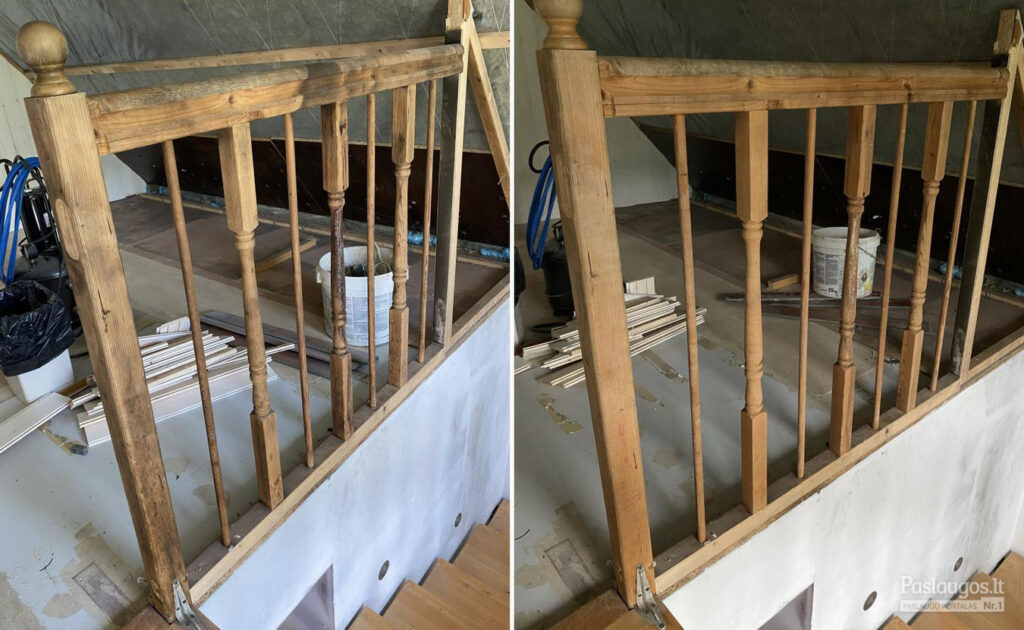
Laser cleaning is increasingly being used as an advanced and effective restoration method, enabling the precise removal of unwanted layers without damaging the underlying surface. However, the key factor is not simply the use of a laser, but the selection of the right technology, since different types of lasers have fundamentally different effects on materials.
When working with sensitive surfaces such as wood or thin structures, choosing the wrong laser can cause excessive thermal impact, changes to the surface structure, or irreversible damage. For this reason, selecting the appropriate technology is critically important, as it determines not only the quality of the result but also the safety of the process.
The Wrong Laser Means a Real Risk of Ignition
It is often assumed that any laser can be used for restoration work, but in practice the situation is far more complex. Different laser technologies are designed for different purposes, which means their application must be evaluated very carefully.
For example, CW (continuous wave) lasers are intended for intensive industrial cleaning. They are highly effective at removing rust or paint from large, heavy-duty surfaces such as railcars, heavy machinery, or ship structures. However, their operating principle is based on continuous energy delivery, which generates a significant amount of heat.
This is precisely what makes them problematic when working with more sensitive materials. In such cases, there are real risks of:
- surface deformation or oxidation
- uncontrolled thermal impact
- damage to the wood structure or even ignition
For these reasons, CW lasers are not a suitable choice for restoration, especially when working with wood or other sensitive surfaces.
The Right Solution for Sensitive Surfaces
When working with surfaces such as wood, rubber, or thin metal, the key criterion is not power, but precision of impact. That is why pulsed lasers are used in restoration, as they allow extremely precise control over both the amount of energy delivered and the duration of its application.
Unlike continuous wave lasers, pulsed lasers operate through short, controlled pulses, making it possible to:
- precisely meter the energy
- adjust pulse duration
- control the intensity of the effect
This makes it possible to selectively remove an unwanted layer, such as dirt or oxides, while preserving the base material intact or affecting it only minimally.
However, not all pulsed lasers are the same. Two main types dominate the market: multimode and single-mode lasers. This is where the essential difference appears: whether a laser simply performs the task, or whether it delivers maximum precision and control.
Single-Mode MOPA Laser – Maximum Precision, Minimal Risk
Multimode lasers are typically chosen when productivity is the main priority, as they efficiently process large areas and remove thick layers. In such cases, speed is prioritized over maximum precision.
In restoration, however, the priorities are different. Here, the most important factor is controlled and precise impact on the surface, especially when working with sensitive or valuable materials. For this reason, a single-mode MOPA laser becomes the superior choice.
It generates a high-quality TEM00 beam characterized by stability and low divergence. This allows the beam to be focused with high precision and ensures even energy distribution, helping to avoid localized overheating.
In practice, this provides several important advantages:
- lower risk of surface damage
- precise and selective removal of unwanted layers
- preservation of the surface structure and authenticity
- a stable and easily controllable process
Therefore, when not only efficiency but also maximum precision and safety are required, a single-mode MOPA laser is the most suitable solution.
The Right Choice Means the Highest Quality and Safety
Laser cleaning in restoration can be an extremely effective solution, but only when the right technology is selected for the specific task. Although different types of lasers can all perform a cleaning function, their effect on the surface differs fundamentally.
When working with sensitive materials, the most important factors are not speed, but precision and control. In practice, this means that the decisive factor is the ability to choose a solution that preserves the structure, authenticity, and value of the surface.
When properly selected, a laser becomes not a source of risk, but a precise restoration tool that makes it possible to achieve the highest-quality result without compromise.