
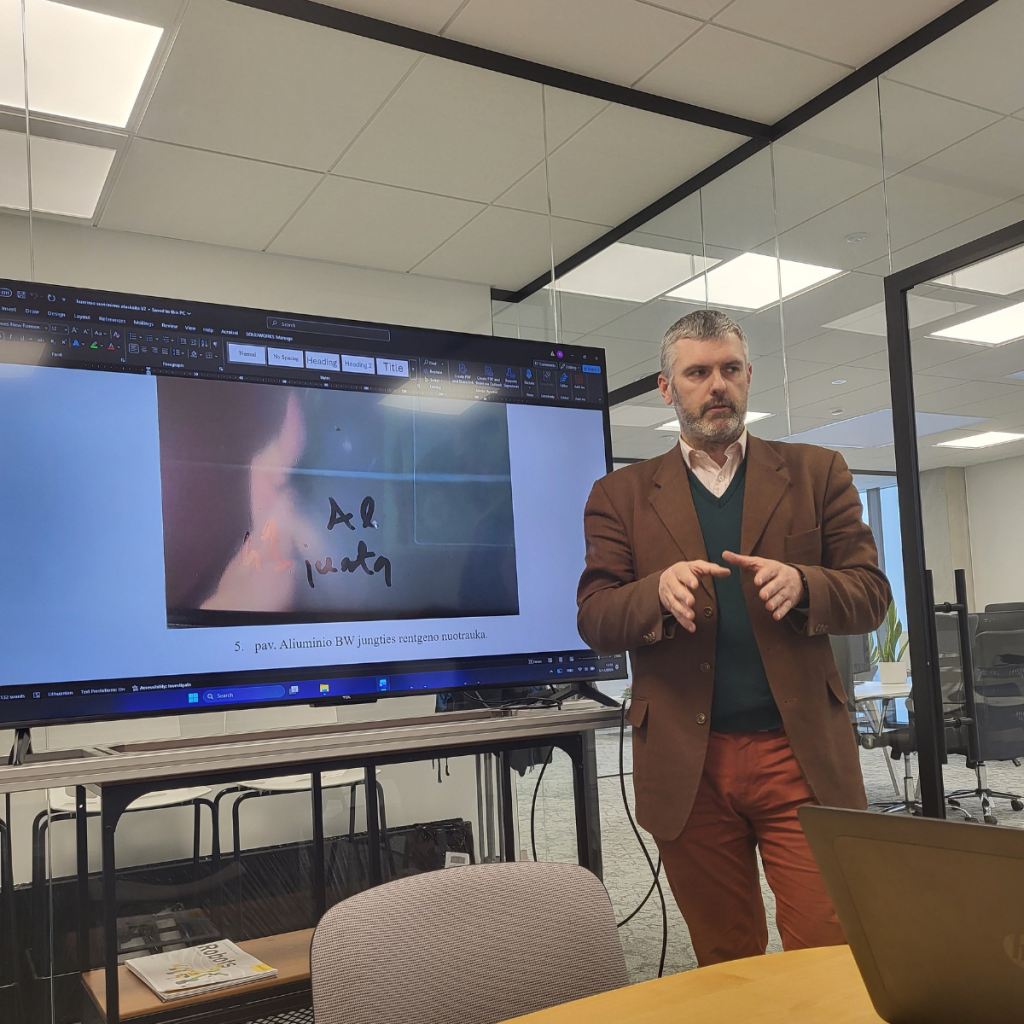
Last week, our team conducted an in-depth exchange of knowledge and practical expertise with our German partners, specialists from Wenzel Schweißtechnik. During the training sessions and hands-on workshops, the primary focus was on optimizing aluminium laser welding processes, with particular attention given to analyzing the causes of porosity formation and identifying effective methods for its reduction.
Focus on Process Stability and Repeatability
Aluminium laser welding is characterized by high productivity and precision; however, it also requires highly accurate control of technological parameters. During the training, key factors affecting weld seam quality were examined, including workpiece surface preparation, laser power and focus settings, welding speed, shielding gas selection, and real-time process monitoring.
During practical trials, participants analyzed how different parameter combinations influence porosity formation, weld geometry, and overall process stability, while also assessing the applicability of the proposed solutions in serial production environments.
Collaboration Between Science and Industry
An important part of the training was carried out in close cooperation with our scientific partner, Lietuvos inžinerijos kolegija (LIK) | Higher Education Institution. Academic knowledge related to material structural changes under laser irradiation and the mechanisms of defect formation was directly linked to practical industrial trials. The exchange of experience, hands-on testing, and technical analysis enabled a systematic evaluation of process limits, identification of critical technological parameters, and the validation of solutions aimed at achieving a stable and repeatable welding process.
International Experience for Technological Advancement
These knowledge exchange activities once again highlighted the importance of international cooperation in addressing complex challenges related to the application of laser technologies. The practical experience of our partners, combined with scientific expertise, enables targeted improvement of technological processes and their adaptation to real industrial conditions.
We sincerely thank the Wenzel Schweißtechnik team and Lietuvos inžinerijos kolegija (LIK) for their professional engagement and constructive collaboration. Such initiatives contribute to the development of advanced laser technologies and their long-term application in industrial manufacturing.